
ICAHT-2026
Theme : Unlock New Pathways For Sustainable Growth In International Markets
21st International Conference On Apparel & Home Textiles 26th September, 2026
Conference Background and Highlights
The global textile and apparel industry is undergoing a period of structural realignment, with sourcing networks being reshaped and supply chains continuing to evolve. Buyers are diversifying their sourcing bases while consolidating supplier relationships, and competitiveness is increasingly moving beyond scale and cost towards capability, responsiveness, market access, and long-term partnerships. India is well positioned to benefit from these shifts. It brings inherent strengths with a strong raw material base, availability of a large workforce, and presence across the entire textile and apparel value chain, complemented by FTAs in key markets such as the UK and the EU. The present moment offers India an opportunity to leverage these strengths and its expanding market access to strengthen its position and establish global leadership in textile and apparel trade.
Recognizing the need for the Indian industry to capitalize on this opportunity and strengthen its share of global trade, the Okhla Garment & Textile Cluster (OGTC) organized the 21st edition of the International Conference on Apparel & Home Textiles (ICAHT) on Saturday, 26th September 2026, at the Apparel Export Promotion Council (AEPC), Gurugram. Held under the theme “Unlocking New Pathways for Sustainable Growth in International Markets,” the conference brought together industry leaders, exporters, global sourcing experts, technology providers, and knowledge partners. The discussions centred on the strategic measures required for India to unlock new international opportunities and achieve sustainable export growth.
The conference programme comprised addresses by distinguished dignitaries, expert presentations, a fireside chat, and a panel discussion, offering a structured platform for knowledge exchange and industry dialogue. The proceedings opened by setting out India’s current position in global textile and apparel trade and the key challenges faced by the industry, from rising costs and margin pressures to productivity gaps, workforce instability, and increasingly stringent sustainability and transparency requirements in export markets. Building on this foundation, the discussions addressed each of these challenges session wise, covering the evolving global sourcing landscape, productivity as a driver of competitiveness, the role of digital technologies and artificial intelligence, the growing importance of Digital Product Passports, and effective ways of manpower management.
Inaugural Session
| Chief Guest | Mr. Sudhir Sekhri, Immediate Past Chairman, AEPC |
| Guest of Honour | Mr. HKL Magu, Managing Partner, M/s Jyoti Apparels |
| OGTC President | Mr. PMS Uppal, MD, M/s Pee Empro Exports Pvt Ltd. |
| Conference Chairman | Col. S. Kapoor, Director General, Okhla Garment & Textile Cluster (OGTC) |
| Knowledge Partner | Mr. Prashant Agarwal, Co-Founder & Joint Managing Director, Wazir Advisors |
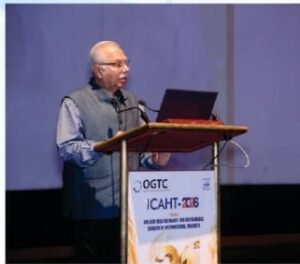 The 21st International Conference on Apparel & Home Textiles (ICAHT) Conference commenced with the inaugural address by Col. S. Kapoor, Director General, OGTC, marking the formal opening of the conference. He welcomed the Chief Guest, the Guest of Honour, speakers, and delegates, and introduced the conference theme, “Unlocking New Pathways for Sustainable Growth in International Markets.”
In his address, Col. S. Kapoor drew attention to the significant transformation underway in the global textile and apparel industry. He highlighted changing market dynamics, rising consumer awareness, and the role of technology in reshaping production processes and supply chains. Emphasizing that sustainability has become an essential requirement rather than a choice, he explained that it extends across the entire value chain. This includes responsible sourcing, efficient resource utilization, ethical manufacturing, and resilient supply chains. He further stated that while technology will define the industry’s future, people will remain its driving force. Investing in workforce skills and promoting continuous learning must therefore remain central to the industry’s growth. He added that the conference would provide a valuable opportunity to exchange knowledge, share best practices, and build partnerships that extend beyond the event.
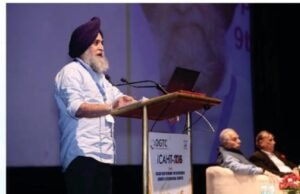 Following the inaugural address, Mr. PMS Uppal, President, OGTC, delivered the opening remarks, explaining that collaboration has been the guiding principle of OGTC since its inception. He emphasized that collaboration is fundamental to the success of any organization, industry, or country. Reflecting on India’s established textile industry, he mentioned that India and China are among the few countries with largely self-sufficient textile supply chains. Yet several competing countries have demonstrated strong performance despite having less integrated textile supply chains. Rather than focusing on external constraints, he urged the industry to introspect on how effectively it is using its own strengths.
Referring to the growing focus on artificial intelligence, Mr. Uppal highlighted that human intelligence remains the most valuable resource when fully utilized. He encouraged participants to reflect on whether they are improving each day, as many businesses still follow the same practices they did a decade ago. Citing China and Vietnam as examples, he remarked that businesses in these countries remain eager to learn despite their progress. He stated that individuals are the future of the country and must keep pace with global change, treating learning as a personal asset that each individual must actively build.
 Mr. Sudhir Sekhri, Immediate Past Chairman, AEPC, then addressed the gathering as the Chief Guest. Reflecting on the changing global trade environment, he highlighted that the realignment of trade is creating strategic opportunities for India across Europe, America, and Oceania. Reiterating the message he had conveyed to global brands during his tenure as AEPC Chairman, he emphasized that access to international markets increasingly depends on verifiable compliance rather than price alone.
He encouraged Indian manufacturers to strengthen their competitiveness through digital technologies and automation, including computer-aided design, fabric optimization, and automated cutting, to minimize waste during production. He also underlined the need for a transition towards material circularity, supported by greater use of recycled fibres, certified organic cotton, and eco-friendly dyes. Highlighting the importance of transparent data and Digital Product Passports, he explained that these systems enable exporters to demonstrate compliance and build greater trust with global brands.
Acknowledging the role of clusters such as OGTC in driving operational efficiency, he urged the industry to move from discussion to action. He identified piloting green technologies, building cross-border partnerships, and investing in workforce upskilling as key steps towards this goal.
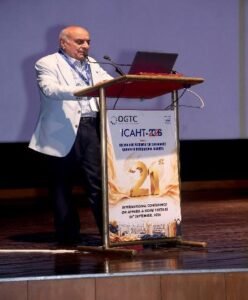 Mr. H.K.L. Magu, Managing Partner, M/s Jyoti Apparels, addressed the inaugural session as the Guest of Honour. Drawing on his extensive experience in the apparel export industry, he reflected on the sector’s evolution from contract manufacturing to in-house production and, more recently, the adoption of advanced technologies and artificial intelligence. He highlighted that growth can no longer be measured by capacity alone, as additional capacity does not necessarily translate into orders. Instead, the industry must become more agile, efficient, sustainable, and reliable to remain competitive.
Mr. Magu explained that international buyers now look beyond cost expecting consistent quality, timely delivery, traceability, compliance, and innovation. While requirements such as Digital Product Passports and sustainability reporting will increasingly become part of international business, he added that they should not become an excessive compliance burden for small and medium exporters. He also emphasized that technology must remain practical and suited to Indian conditions. Investment in people must progress alongside investment in technology. Above all, he highlighted that factories must operate with honesty and integrity, as initiatives in sustainability and AI can create real value only when implemented in accordance with these principles.
Theme Presentation: Unlocking New Pathways for Sustainable Growth in International Markets
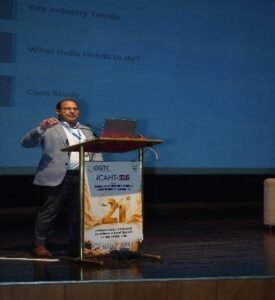 Next, Mr. Prashant Agarwal, Co-Founder & Joint Managing Director, Wazir Advisors, delivered the theme presentation titled “Unlocking New Pathways for Sustainable Growth in International Markets.” The presentation examined the key shifts reshaping global textile and apparel sourcing and the opportunities these developments present for India.
The presentation opened with an overview of the global textile and apparel trade, estimated at US$904 billion in 2025, and highlighted the ongoing shifts in global sourcing patterns. China’s share of global apparel trade has declined from 41% in 2015 to 27% in 2025, while Vietnam and Bangladesh have emerged as key beneficiaries of this shift. In contrast, India’s apparel exports have remained relatively stagnant, reaching approximately US$16 billion in 2025.
The presentation further examined how cautious buying behaviour and tighter inventory management in major markets are influencing sourcing strategies. Buyers are increasingly seeking to maintain geographic diversification while simultaneously consolidating their supplier base. As a result, competitiveness is evolving beyond traditional considerations of scale and cost, with greater emphasis being placed on capability, responsiveness, compliance, reliability, and long-term strategic partnerships. The presentation also highlighted the growing importance of sustainability and regulatory compliance, with developments such as the EU Digital Product Passport increasingly linking compliance with market access. At the same time, India’s expanding network of trade agreements, including those with the UK and other key markets, is creating greater opportunities for preferential market access.
Against this backdrop, Mr. Agarwal outlined three strategic priorities for Indian manufacturers:
- Maximizing the benefits of preferential market access: Building capacity in underpenetrated market, high-demand product categories; upgrading manufacturing capabilities; and strengthening sustainability and compliance systems to fully leverage FTAs.
- Converting market access into export opportunities: Adopting targeted, market-specific approaches to engage buyers and expand business across priority markets, including the EU, UK, UAE, Japan, and South Korea.
- Building globally competitive capabilities: Developing a future-ready workforce and strengthening manufacturing excellence through automation, digitalization, and AI, while fostering strategic partnerships across the supply chain.
Drawing on a case study of Arvind Ltd., the presentation concluded with the key message that unlocking India’s next phase of international growth will require more than expanding capacity. It will require stronger capabilities, deeper buyer and supply-chain partnerships, and an ecosystem equipped to respond to the evolving requirements of global markets.
The theme presentation was followed by a short tea break, providing participants with an opportunity to network and exchange perspectives before the subsequent sessions.
Presentation: The New Manufacturing Philosophy for a New Industrial Era
 Following the tea break, Dr. Charles Dagher, Director, Dagher & Partners,, delivered a presentation titled “The New Manufacturing Philosophy for a New Industrial Era,” exploring an evolving paradigm for the design, governance, and operation of manufacturing systems.
Dr. Dagher emphasized that while sustainability, technology, and automation are increasingly critical to the future of manufacturing, these elements alone are insufficient to deliver sustained competitiveness and profitability. He highlighted that meaningful transformation requires a fundamental re-engineering of the manufacturing ecosystem, underpinned by integrated engineering, standardized systems, real-time intelligence, workforce adaptability, and operational agility.
He stressed the need for the apparel industry to move beyond fragmented improvement initiatives, isolated technology investments, and legacy manufacturing practices towards a more integrated, data-driven, and human-centric manufacturing philosophy. In this context, he emphasized that AI and digitalization should extend beyond providing greater visibility into factory operations and instead generate actionable intelligence, drive measurable productivity improvements, and contribute directly to enhanced business performance.
Looking ahead, Dr. Dagher outlined a vision for apparel manufacturing in which organizations transition from reactive and experience-driven operations to proactive, intelligent, and systematically engineered manufacturing environments. Such an approach, he noted, would require the effective integration of people, processes, and technology to achieve sustained profitability, environmental performance, and long-term competitiveness.
Fireside Chat: Decoding Global Competitiveness: Why Productivity Will Define the Next Growth Wave in Apparel Exports
 Mr. Prashant Agarwal, Co-Founder & Joint Managing Director, Wazir Advisors, moderated a fireside chat with Mr. Fazlee Shamim Ehsan, Managing Director, Fatullah Apparels Ltd. and Executive President, BKMEA, Bangladesh, titled “Decoding Global Competitiveness: Why Productivity Will Define the Next Growth Wave in Apparel Exports.”
Mr. Ehsan brought the perspective of Bangladesh, one of the world’s leading apparel-exporting countries, drawing on the country’s experience in building a globally competitive apparel export industry. He highlighted the role of consistent government policies and incentives, close collaboration between industry associations and the government, and sustained efforts to build manufacturing scale and capabilities. He cited the bonded warehouse facility as a key example of policy support, enabling export-oriented garment manufacturers to import raw materials duty-free and supporting the cost competitiveness of Bangladesh’s apparel exports.
He noted that buyer expectations have evolved significantly, with sourcing decisions increasingly influenced by speed, flexibility, quality, transparency, and sustainability, while manufacturers continue to face rising costs, tighter timelines, and sustained margin pressures. In this environment, he emphasized that manufacturers can no longer rely on scale or market access alone, making productivity a central pillar of competitiveness. Reflecting on Bangladesh’s experience, he highlighted that both attracting buyers and retaining them through consistent performance, reliability, and long-term relationships have been important drivers of the country’s apparel export growth.
On productivity, Mr. Ehsan emphasized the importance of effective manpower systems, including structured training, skill development, and worker engagement, alongside the adoption of technology and a disciplined focus on operational excellence at the factory level. Sustainability was another key theme of the discussion, with Mr. Ehsan highlighting the Bangladesh apparel industry’s investments in green and sustainable manufacturing. He noted that sustainability has increasingly become an important consideration in building buyer confidence and strengthening long-term business relationships.
The discussion highlighted that as global apparel sourcing becomes increasingly competitive, productivity, operational excellence, workforce capabilities, technology adoption, and sustainability will be central to strengthening manufacturers’ competitiveness and supporting the next phase of export growth.
Dashboard Launch: Indian State Government Textile Policies
 The conference also witnessed the unveiling of the Wazir Policy Intelligence Dashboard which was undertaken by Ms. Vibhuti Sharma, Senior Consultant, Wazir Advisors.
The dashboard consolidates incentives under 16 State Textile & Apparel Policies on a single interactive platform, enabling manufacturers and investors to compare state-level incentives across key parameters such as capital and interest subsidies, power, employment, and sustainability, along with policy validity and eligibility criteria. The dashboard is designed to support informed investment and location decisions by enabling stakeholders to assess and compare state incentives for textile and apparel investments.
Presentation: DPP Beyond Compliance – Market Access and Competitiveness Lever
 Next, Ms. Chinki Tyagi Khare, Senior Sales Lead, Green Story, delivered a presentation titled “DPP Beyond Compliance – Market Access and Competitiveness Lever.”
She explained that a Digital Product Passport (DPP) is a digital record linked to a product, typically accessed through a QR code, containing information on its materials, origin, supply chain, environmental footprint, and end-of-life management. She highlighted that DPPs are being introduced under the European Union’s Ecodesign for Sustainable Products Regulation (ESPR), with textiles identified as a priority product group, making DPP readiness increasingly important for exporters to the EU.
Moving beyond compliance, Ms. Khare highlighted the potential of DPPs to strengthen market access and competitiveness. As global brands increasingly seek credible product-level sustainability and traceability information, suppliers with robust data capabilities can strengthen buyer confidence, retain existing business, and access new opportunities.
She emphasized that effective DPP implementation requires two key foundations: credible product-level environmental data, supported by Life Cycle Assessment (LCA), and end-to-end supply chain traceability, enabled through collaboration with raw material and fabric suppliers. Early investment in these capabilities, she noted, can help exporters turn transparency and data readiness into a competitive advantage.
The presentation marked the conclusion of the first half of the conference, followed by a lunch break that provided participants an opportunity for informal networking and further discussion.
Presentation: Digital First: Integrating Technology to Improve Productivity
 Following the lunch break, Mr. Neeraj Rana, Head – Solutions Consulting South Asia, Coats Digital, delivered a presentation titled “Digital First: Integrating Technology to Improve Productivity.”
Mr. Rana examined the evolving competitive landscape across China, Vietnam, Bangladesh, and India, highlighting the distinct strengths shaping each country’s position. While China continues to lead on the strength of scale and automation, Vietnam benefits from FTAs and speed, Bangladesh from cost competitiveness and scale, and India from its diversified product portfolio and integrated manufacturing ecosystem.
He highlighted how geopolitical uncertainty, shorter production cycles, compressed lead times, demand volatility, and rising input costs are placing increasing pressure on apparel manufacturers and margins. In this environment, he emphasized that competitiveness will increasingly depend on the ability to combine speed, scale, and digitalization.
Mr. Rana further examined the key drivers of factory-level productivity, including smaller order sizes, more frequent changeovers, raw material costs, rising labour costs, and quality losses. He illustrated how factories operating with similar machines, labour costs, and orders can achieve significantly different margins based on their ability to effectively monitor and manage their operations.
He then presented a digital maturity framework, outlining the progression from siloed, experience-driven operations reliant on paper and spreadsheets to connected systems built around a single source of truth. Beyond this, manufacturers can move towards predictive, prescriptive, and AI-enabled operations capable of anticipating issues, recommending corrective actions, and responding to deviations in real time. By integrating planning, efficiency, and costing, digital systems can enable manufacturers to make faster and more informed decisions.
The presentation centred on a key principle: “The factory that can see itself can improve itself.” Mr. Rana emphasized that operational visibility is fundamental to building more efficient, responsive, and future-ready manufacturing environments.
Panel Discussion: International Perspectives: Lessons from High-Performing Apparel Manufacturing Ecosystems
| Moderator | Mr. Varun Vaid, Executive Director, Wazir Advisors |
| Panelists | Panellist 1: Mr. Fazlee Shamim Ehsan, Managing Director, Fatullah Apparels Ltd. and Executive President, BKMEA, Bangladesh
Panellist 2: Mr. Ankit Bhandari, Ex-Sourcing Director, Gap Inc. Panellist 3: Mr. Rohit Joshi, COO, Impulse International Pvt Ltd. |
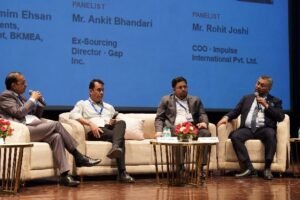 The panel discussion on “International Perspectives: Lessons from High-Performing Apparel Manufacturing Ecosystems” was moderated by Mr. Varun Vaid, Executive Director, Wazir Advisors. The discussion examined the practices and capabilities that have enabled leading apparel-exporting countries to build competitive manufacturing ecosystems and the lessons relevant to strengthening India’s global competitiveness.
Mr. Fazlee Shamim Ehsan highlighted Bangladesh’s experience in developing a globally competitive apparel industry. He spoke about the role of industry associations in driving collective progress, from worker training and skill development to raising compliance and safety standards across factories. He also pointed to the industry’s transformation towards green and sustainable manufacturing, which has strengthened the confidence of global buyers. Above all, he stressed that productivity improvement and workforce development must advance together for an ecosystem to remain competitive over time.
Mr. Ankit Bhandari highlighted the evolving requirements of global brands. As brands consolidate their supplier base, they increasingly seek partners that can deliver consistent quality, reliable lead times, compliance, and transparency, along with the ability to scale in line with the brand’s growth. He noted that sourcing decisions increasingly take into consideration the strength of the broader ecosystem, rather than that of individual factories alone. He also highlighted that India’s trade agreements provide suppliers with a stronger platform to engage with brands and explore new markets. Suppliers that invest in digitalization, he added, are better positioned to deliver the speed and visibility that sourcing teams increasingly expect.
Mr. Rohit Joshi emphasized the practices that translate buyer expectations into consistent performance, underlining the importance of structured training systems, capable and empowered supervisors, and disciplined performance management in sustaining productivity. While technology and data can support factories in tracking and improving performance, their effectiveness ultimately depends on the alignment of people and processes behind them.
 The discussion highlighted key priorities for India’s apparel industry, including leveraging FTAs to expand market access, accelerating digitalization to improve operational efficiency, strengthening workforce capabilities, and advancing sustainability practices. These areas will be critical to building resilient manufacturing capabilities and strengthening India’s competitiveness in international markets.
Presentation: AI in Apparel Manufacturing
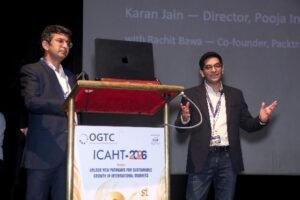 In the next segment of the conference, Mr. Karan Jain, Director, and Mr. Rachit Bawa, Pooja International, delivered a presentation titled “AI in Apparel Manufacturing,” providing a practical perspective on the application of artificial intelligence within apparel manufacturing.
The presenters outlined the evolving operating environment for apparel manufacturers, characterized by smaller order quantities, frequent style changes, and shorter lead times. These dynamics require teams across merchandising, planning, and production to process large volumes of information and respond quickly to changing requirements. However, information often remains fragmented across departments, spreadsheets, and manual records, making timely access and decision-making challenging.
Moving beyond the conceptual aspects of AI, the presenters demonstrated an AI-powered platform designed to support operations across the apparel value chain. Through live use cases, they showcased how the platform can simplify merchandising and production planning by processing and consolidating data within a few clicks, enabling teams to gain a clearer, real-time view of operations and make faster, more informed decisions.
The demonstration also highlighted the potential of such tools to reduce the time spent on routine data handling, allowing merchandisers and planners to focus more on analysis and decision-making. Access to timely and consolidated information can further support effective order tracking, early identification of issues, and faster responses to buyer requirements.
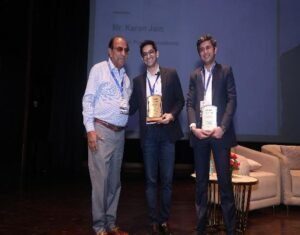 The presentation highlighted that AI adoption in apparel manufacturing is no longer a distant prospect, but an immediate opportunity for manufacturers to improve productivity, responsiveness, and decision-making. To realize its value, manufacturers need to focus on practical use cases linked to existing business processes, strengthen the quality and availability of operational data, and equip their teams to effectively adopt and use these technologies. The key takeaway for manufacturers was that AI should not be viewed simply as a technology investment, but as a tool to simplify operations, improve execution, and drive measurable business outcomes.
Presentation: Managing Manpower in High Performing Factories: Cross-Industry Lessons in Talent, Culture, and Change
 The final presentation of the conference was delivered by Mr. Sandeep Girotra, Former CHRO, DCM Shriram Limited, titled “Managing Manpower in High Performing Factories: Cross-Industry Lessons in Talent, Culture, and Change.” Drawing on his extensive global human resources experience across India, Asia Pacific, the Middle East, and Europe, Mr. Girotra addressed the workforce challenges facing Indian manufacturing and the implications for building high-performing organizations.
Mr. Girotra explained that India’s manufacturing workforce challenge is not a shortage of people, but a shortage of trained, willing, and mobile workers, compounded by younger workers’ shifting aspirations towards white-collar and flexible roles. In the textile and apparel sector, one of the country’s largest employers with a predominantly women workforce, the challenge is intensified by a largely migrant, first-generation workforce, a geographic mismatch between labour-surplus states and industrial hubs, and a fragmented base of small units with limited capacity to invest in people and workforce development. He noted that these challenges are closely linked to talent, culture, and change management.
To strengthen the workforce stability, he emphasized the importance of formalizing pay and contracts, pairing skilling with visible career pathways, elevating supervision quality, protecting and empowering women workers, and building pride in work. Formalization, he explained, cultivates dignity and ownership among workers, which in turn leads to higher productivity, with each improvement reinforcing the next. He further emphasized that real change must begin with leadership, outlining five pillars on which growing companies either succeed or stall: organization design and role clarity, leadership capability and depth, hiring at speed, career paths and retention, and a culture that scales. He illustrated these with practices from leading Indian textile and apparel companies.
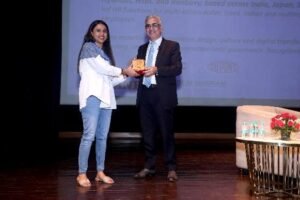 He concluded by emphasizing that workforce stability, skilling, and dignity of work must be treated as strategic drivers of competitiveness rather than as an HR overhead. Addressing these dimensions will be critical for the industry to attract, retain, and develop the workforce required for sustained growth.
Closing Remarks and Vote of Thanks
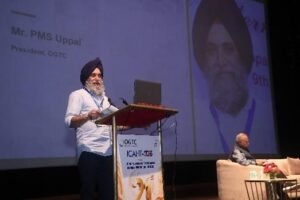 At the conclusion of the conference, Mr. PMS Uppal, President, OGTC, delivered the closing remarks. He expressed his appreciation to the speakers, panellists, and delegates for their participation and reflected on the key themes discussed throughout the day, including the evolving global sourcing landscape, the importance of productivity and workforce capabilities, and the growing role of technology, AI, and sustainability. Reiterating a key message from the conference, he emphasized that people remain the most important resource for the industry, and that technology and other enablers can deliver their full potential only when supported by capable and engaged people. He reaffirmed OGTC’s commitment to supporting its members and the wider industry in identifying and pursuing new pathways for growth in international markets.
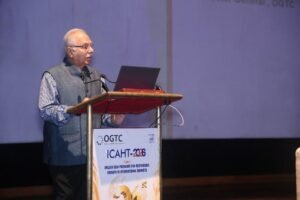 Col. S. Kapoor, Director General, OGTC, delivered the vote of thanks, expressing his gratitude to the Chief Guest, Guest of Honour, speakers, panellists, and moderators for their valuable contributions, and to the delegates for their participation and engagement throughout the conference.
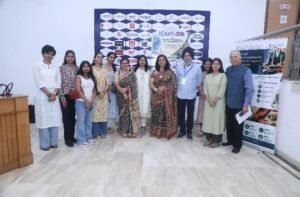 The 21st edition of ICAHT concluded with a hi-tea, providing delegates, speakers, and industry leaders an opportunity to continue their discussions and strengthen professional connections in an informal setting. The participation and engagement throughout the conference reflected the industry’s focus on strengthening competitiveness and pursuing sustainable growth in international markets.